

A practical guide to getting the rug size right — the first time.
A rug that is the wrong size can undermine an otherwise beautifully designed room. Too small, and it looks like an afterthought — a postage stamp floating in the middle of the floor. Too large, and it competes with the walls and crowds the furniture. Getting the size right is one of the most important decisions in any interior, and yet it is one of the least discussed.
This guide covers everything you need to know: the principles behind rug sizing, room-by-room recommendations, and how to use our free rug size calculator to get a precise suggestion based on your exact room and furniture measurements.
The golden rules of rug sizing
Before diving into room-specific advice, three principles apply everywhere.
1. Always leave a border of bare floor
A rug that runs wall to wall is a carpet. A rug should always reveal some floor around it — typically between 25 and 45 cm on each side. This border grounds the rug visually and makes the room feel intentional rather than accidental. In smaller rooms, 25–30 cm is sufficient. In larger rooms, 35–45 cm feels more balanced.

2. Anchor the furniture, not just the floor
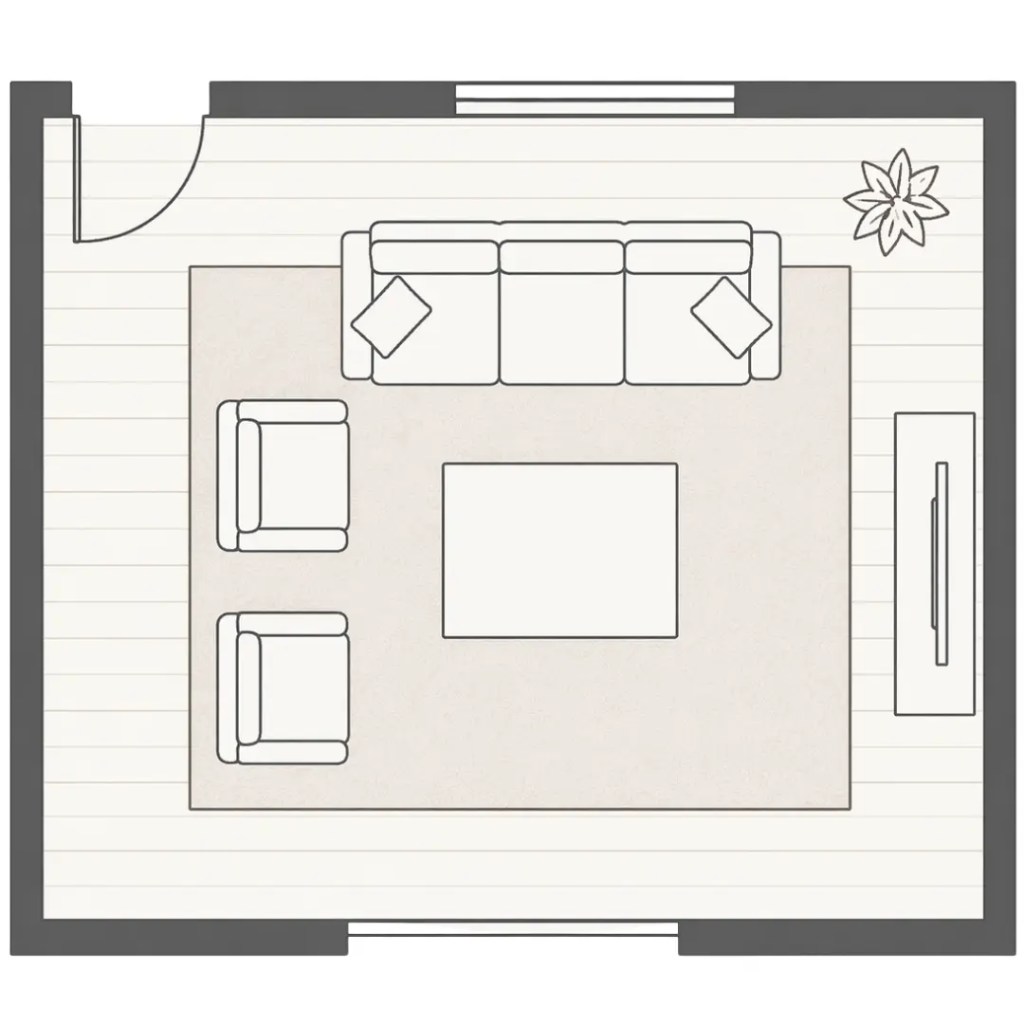
The most common sizing mistake is choosing a rug based on the room size alone, without considering the furniture. A rug’s job is to anchor a grouping — the seating arrangement in a living room, the bed in a bedroom, the table in a dining room. Think of it as a frame for each scene, not a mat for the floor.
3. When in doubt, go larger
If you are choosing between two sizes, the larger one is almost always the better choice. A slightly generous rug reads as confident and considered. A slightly small rug reads as an afterthought — and no amount of careful placement will fix it.

Room-by-room rug sizing guide
Living room
The living room offers the most flexibility — and therefore the most room for error. There are two main approaches:
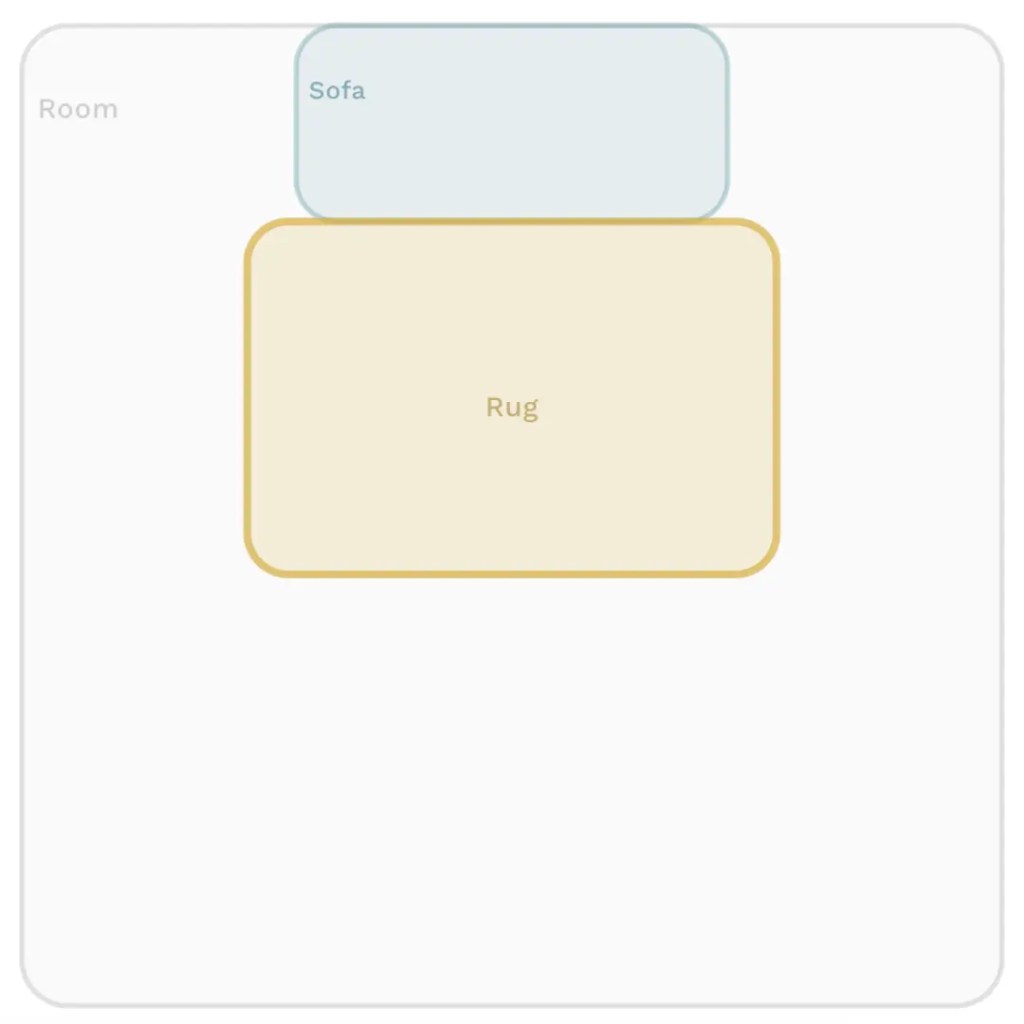
Front legs on the rug (Rug in front of sofa). The front legs of the sofa (and any facing chairs) sit on the rug; the back legs remain on the floor. This is the most popular approach and works well in most rooms. The rug needs to be wide enough to accommodate all the front legs comfortably, and deep enough to extend a comfortable distance in front of the seating.
All legs on the rug (Rug under sofa + in front). The entire seating group — sofa, chairs, coffee table — sits on the rug. This creates a more formal, enveloping arrangement. It requires a significantly larger rug, but it is the most cohesive and considered look when the room and budget allow.
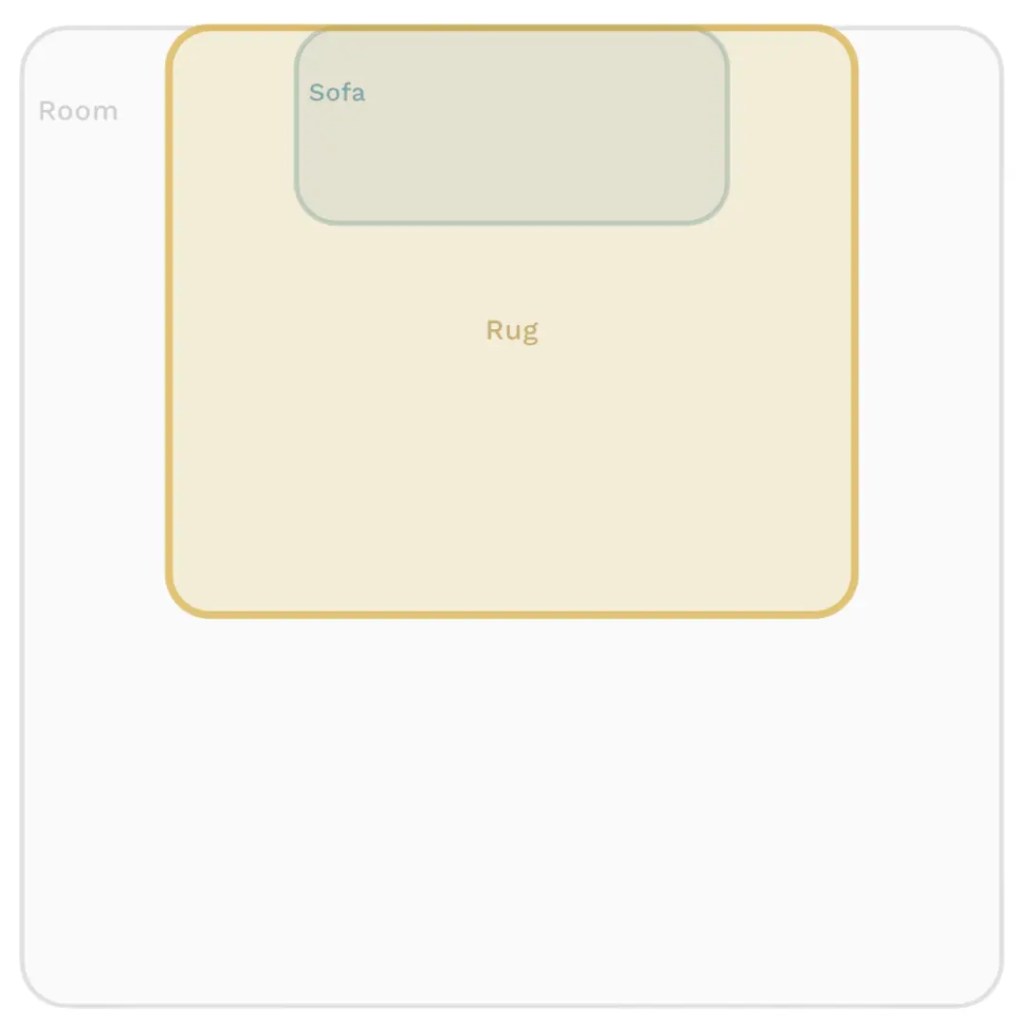
For a standard three-seat sofa (around 220 cm wide), a rug of 240–280 × 170–200 cm typically works for the front-legs approach. For all legs on, expect to need 280–340 × 230–270 cm or more.
Dining room
The dining room has the clearest rule of all: the rug must be large enough that the chairs remain fully on the rug when pulled out. This means extending at least 60 cm beyond each side of the table — 75 cm is ideal and what we recommend.
For a dining table measuring 200 × 100 cm, that means a rug of at least 320 × 220 cm (with 60 cm each side) or 350 × 250 cm (with 75 cm each side). A rug that is too small will catch chair legs as people sit down — a small frustration that becomes a large one over time.
The rug should also align with the table — a rectangular rug under a rectangular table, a round rug under a round one. The orientations should match.

Bedroom
In a bedroom, the rug’s primary purpose is comfort underfoot — specifically, the first step out of bed in the morning. There are three approaches:
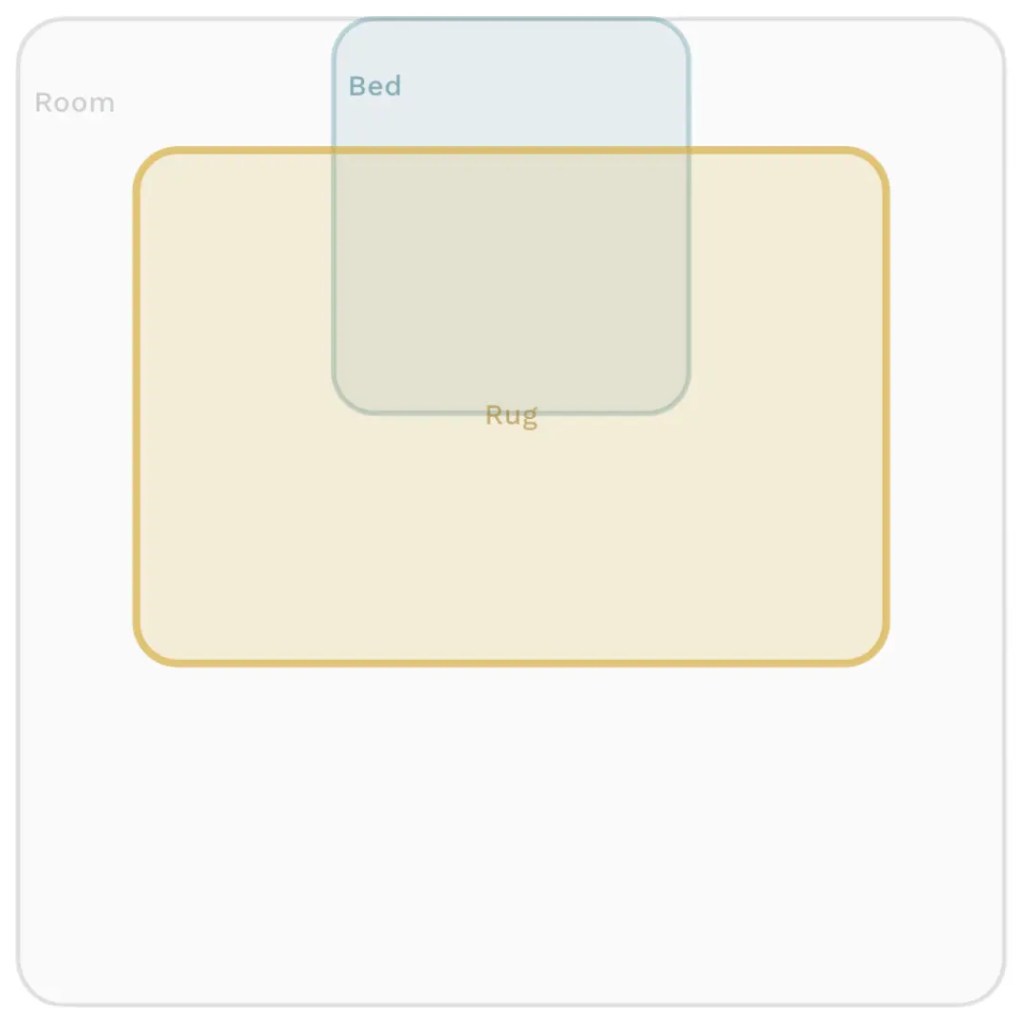
Full coverage (Rug under bed + nightstands). The rug extends under the bed and out on all sides — typically 70–90 cm at the foot and on each side. This is the most luxurious look and works beautifully in larger bedrooms. For a 180 cm wide bed, expect a rug of 320–360 cm wide.
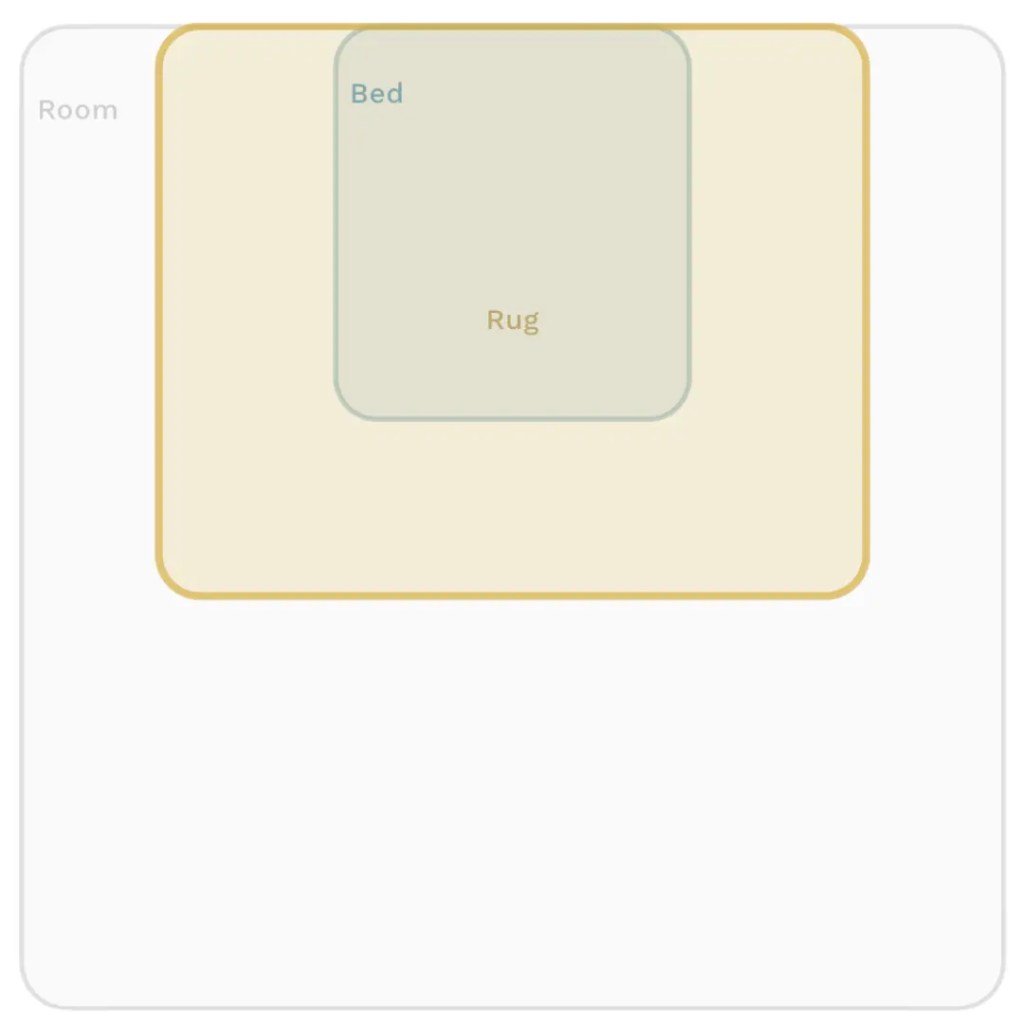
Lower two-thirds. The rug sits under the lower portion of the bed and extends out at the foot and sides. The head of the bed sits on bare floor. This is a practical and elegant option, particularly in rooms where the bed sits against a wall.
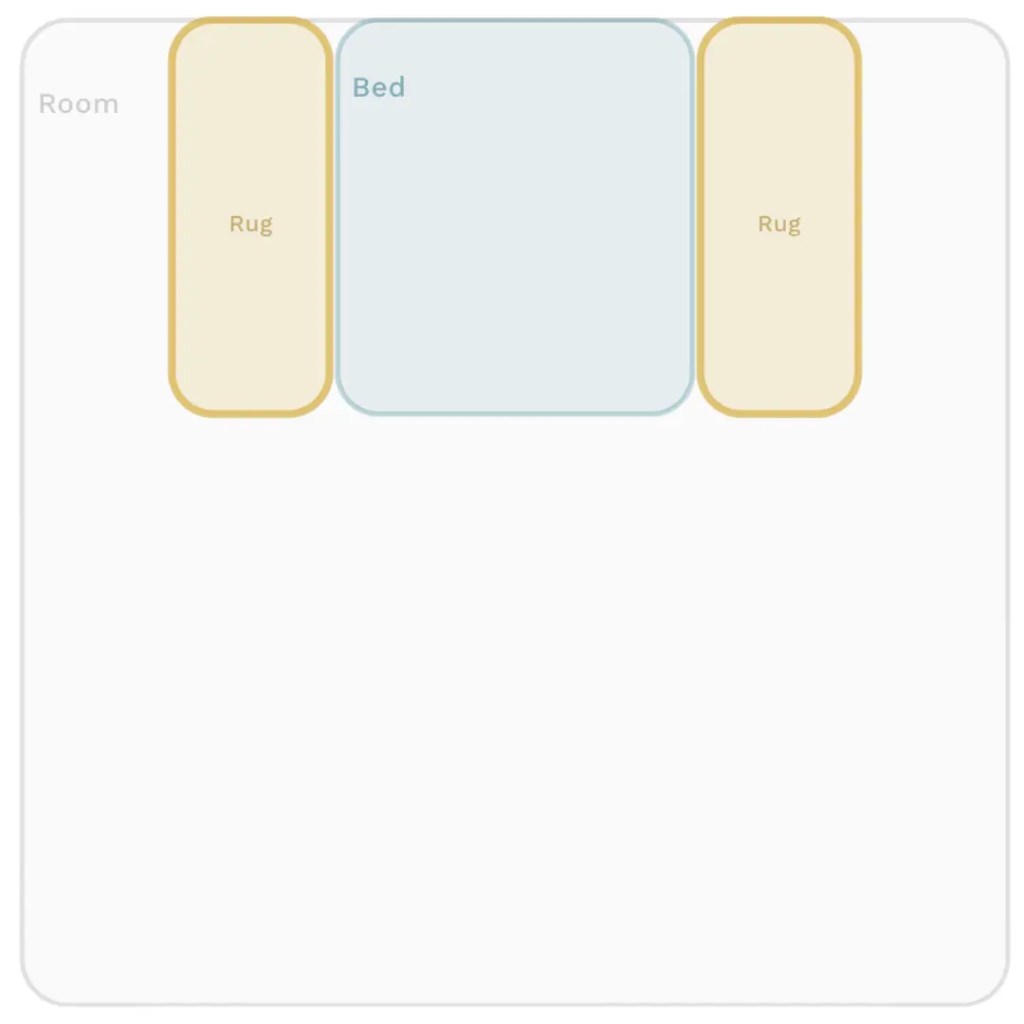
Bedside runners. Two narrow runners sit on each side of the bed. This is ideal in smaller rooms or when you want a graphic, layered look. Runners should match the length of the bed and be around 70–90 cm wide.
Children’s room and nursery
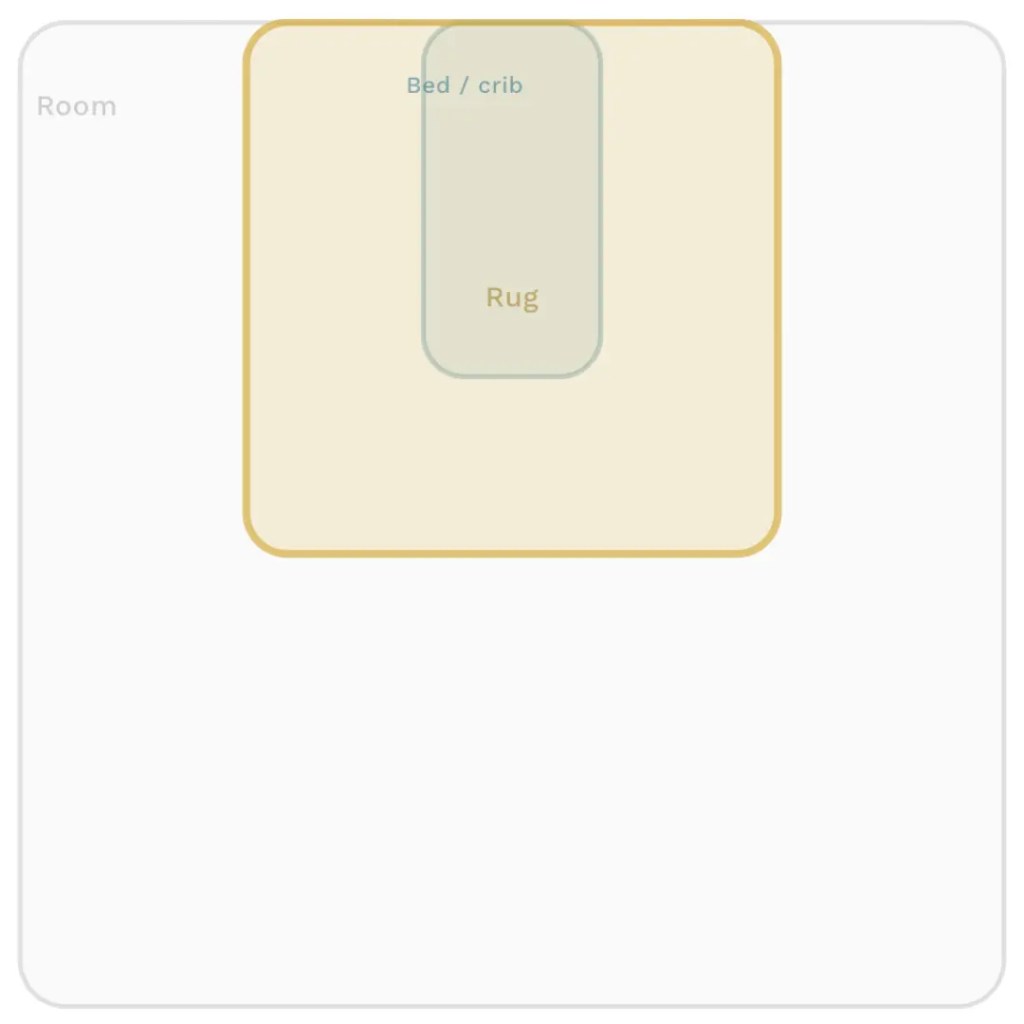
In a child’s room, the rug often serves double duty as a play surface. Size generously — children spend a lot of time on the floor, and a rug that is too small will not be played on quite as comfortably. A rug that extends well beyond the bed and into the play area of the room is almost always the right choice. Consider that children grow fast, and what may seem large today will feel appropriate in a few years.
Office and library
A rug in a home office or library does more than add warmth — it defines the working zone within the room and absorbs sound, making the space feel more focused and considered.
There are two approaches depending on how the room is used.
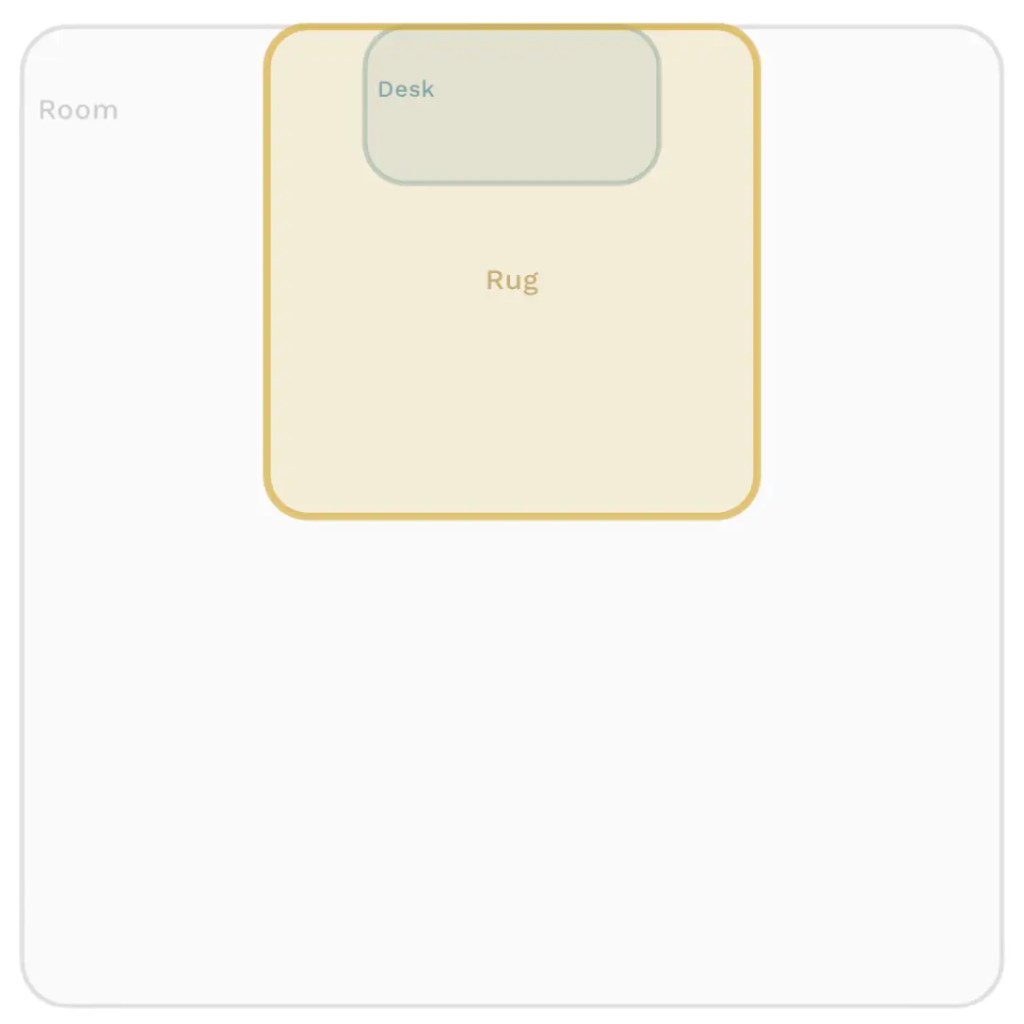
Desk and chair zone. If the primary use is a single workstation, the rug should be large enough that the chair remains fully on the rug when pushed back — typically extending 30–40 cm beyond the desk on the sides and at least 70–80 cm in front of it to accommodate the chair’s full roll-back range. A rug that is too small will catch the chair legs every time you sit down or stand up.
Seating zone. If the room includes a reading chair, a small sofa, or a conversation area alongside the desk, treat that grouping as you would a living room arrangement — the rug should anchor all the seating with the front legs at minimum sitting on it, ideally all legs. This creates a distinct zone within the room that reads as intentional rather than accidental.
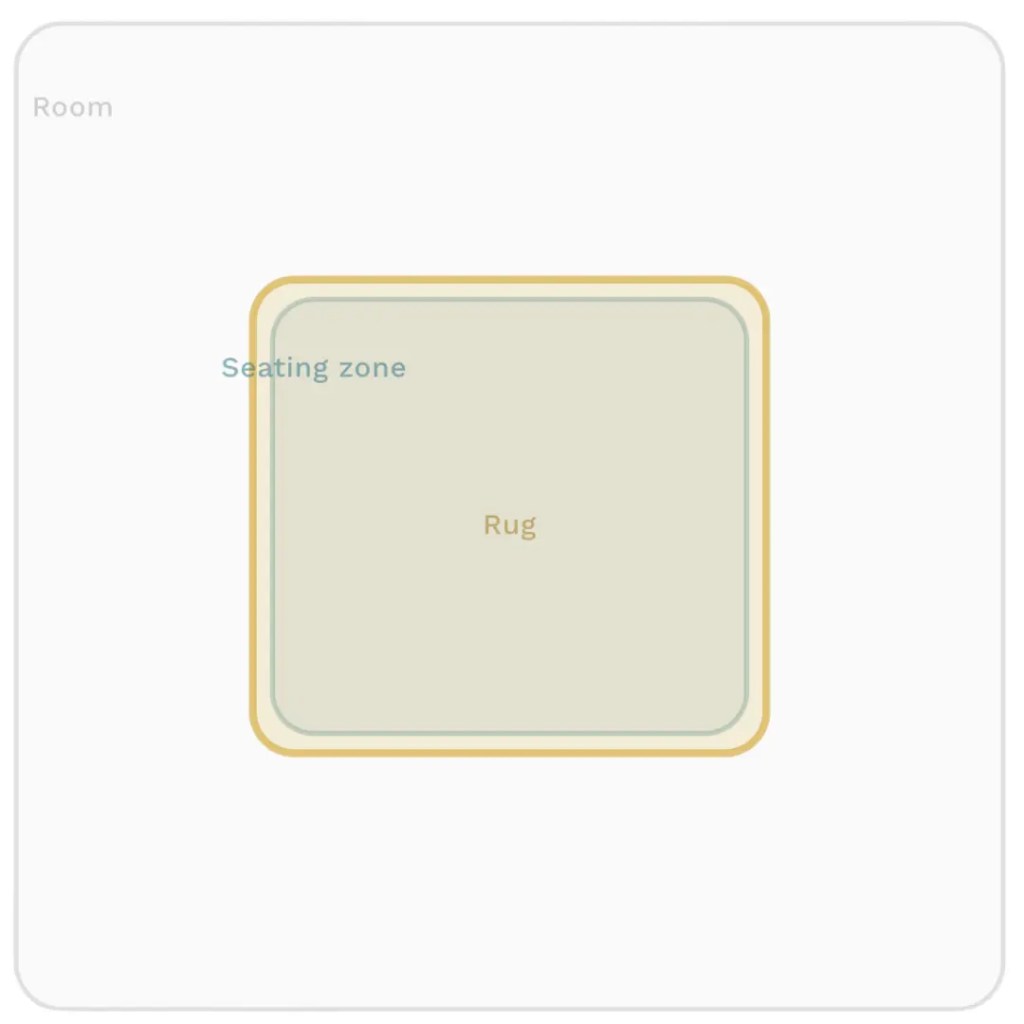
In either case, the rug should complement the room’s function: something with enough visual weight to ground the space, but not so decorative that it competes with your work or your books.
Entrance hall and corridor
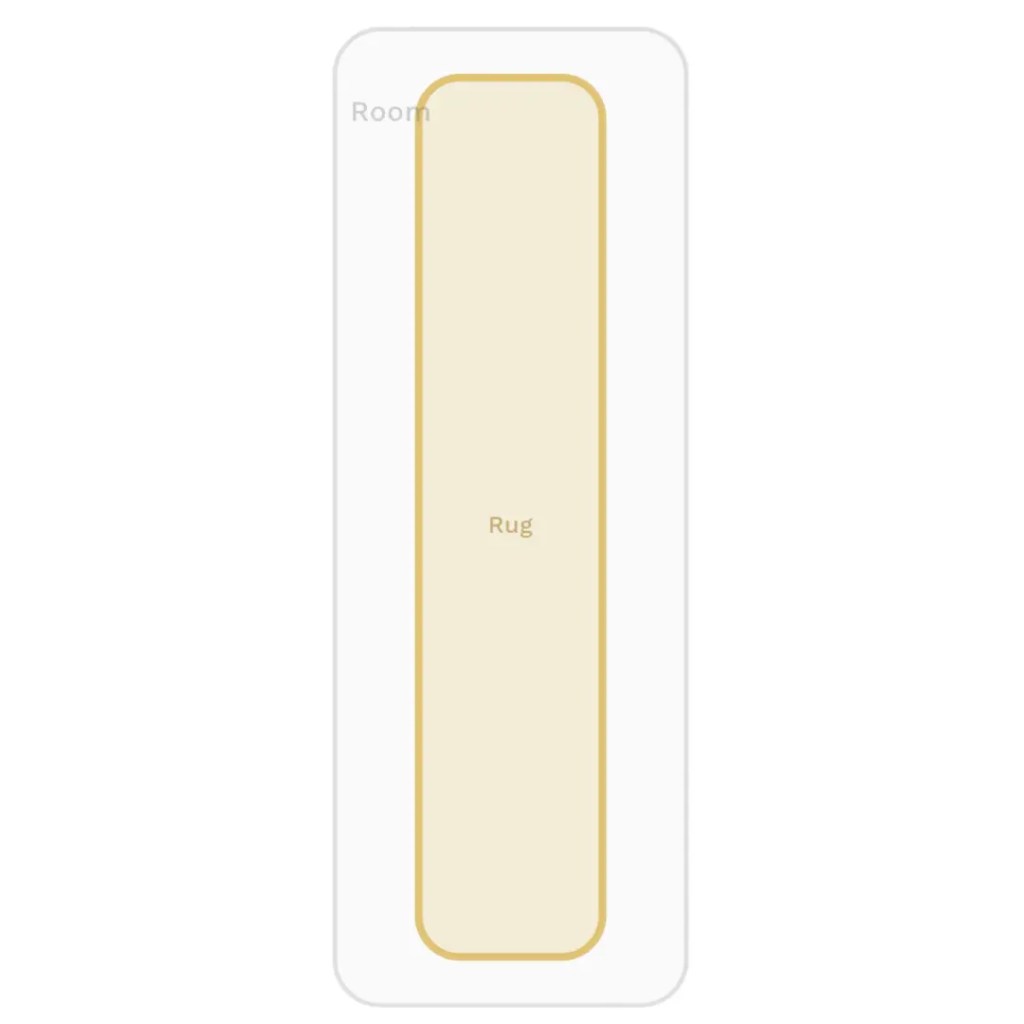
In an entrance hall, the rug should cover the primary walking path and leave a consistent margin on each side. A runner in a corridor should be proportional to the corridor’s width — typically 60–80% of the floor width — and run its full usable length. Avoid runners that are too narrow or too short, as they create an awkward, unfinished impression.
How to measure your room and furniture
Accurate measurements make all the difference. Here is how to do it properly.
Room dimensions. Measure the clear floor area — wall to wall, not including skirting boards, built-in wardrobes, or any fixed architectural elements. If your room has a standard rectangular shape, use its full dimensions. If you need a rug in a custom shape — an L-shape, a curve, or any bespoke outline — we can create that too. Our rugs are woven as a rectangle first and then cut and finished to your exact shape. In that case, measure the smallest rectangle that contains the entire outline of the shape you need: the full width at its widest point and the full length at its longest. That rectangle is what you enter into the calculator, and we will tailor the exact shape later on.
Furniture dimensions. Measure the outer footprint of each key piece — the full width and depth of the sofa, the width and length of the bed or dining table. For the dining room, measure the table only, not the chairs — the calculator accounts for chair pull-out distance automatically.
Not sure? Round up slightly on all measurements. It is better to discover that a rug is slightly more generous than expected than to find it is too small once it arrives.
Get your personalised rug size recommendation
Every room is different. The principles above will take you far, but our free rug size calculator will give you a precise recommendation based on your exact room type, dimensions, and furniture layout — along with a scaled visual preview showing how each suggested size sits in your space.
Select your room type, enter your measurements, and choose a layout scenario. The calculator suggests three sizes — Ideal, Compact, and Generous — and lets you preview any custom size as well. It works in both metric (cm) and imperial (ft & in).
Still have questions about rug sizing? Visit our Rug Size Calculator page for a full list of answered questions — from how to measure your room to how our sizing suggestions are calculated.